Your Case Studies
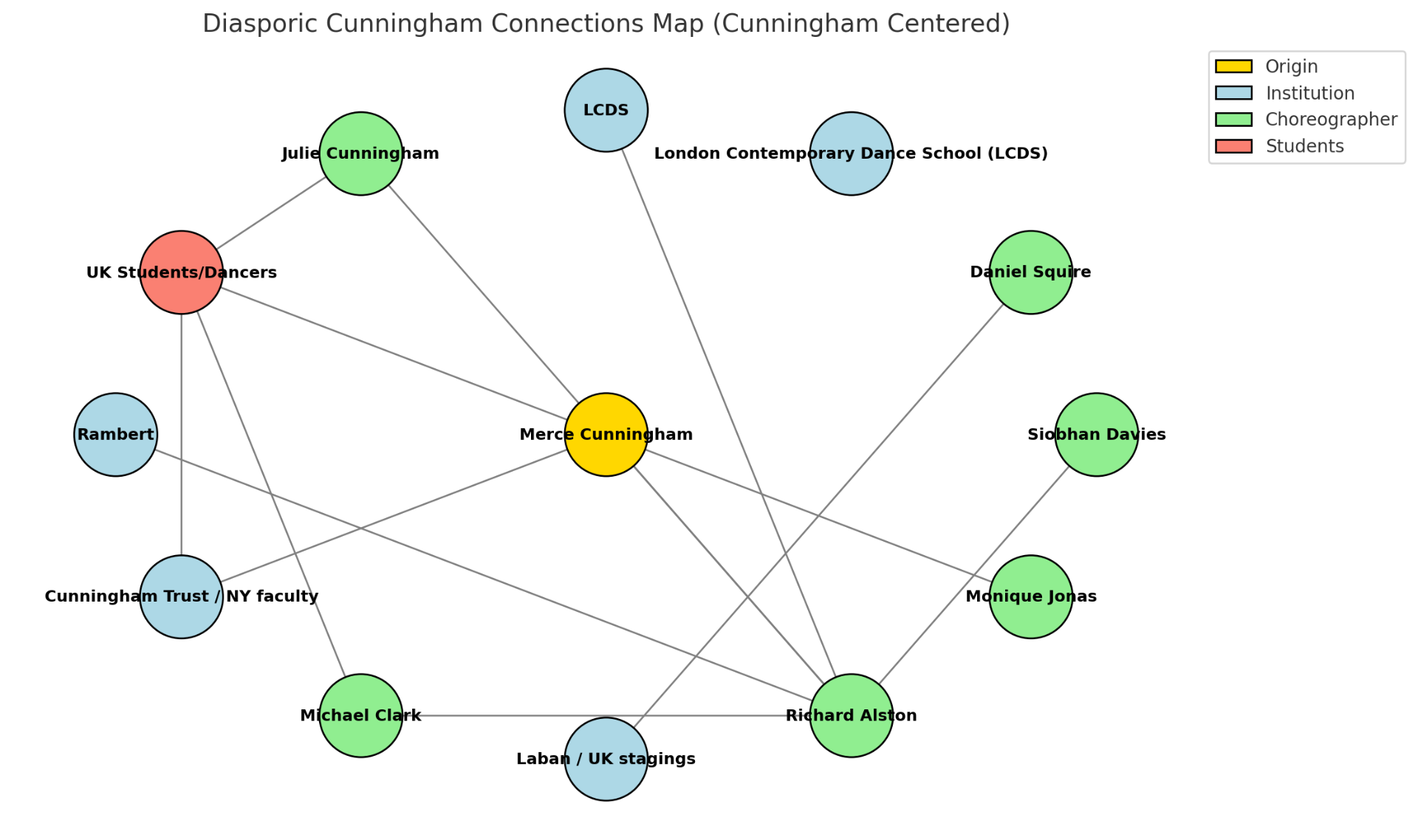
Monique Jonas, Richard Alston, and Michael Clark already do this work in “Unauthorised” — this module is a placeholder frame for you to drop that material in, rather than a paraphrase of it here.
Monique Jonas
Monique Jonas began dancing through the Royal Opera House’s Chance to Dance programme, trained at Arts Educational Schools London in musical theatre and jazz, and completed her training at Rambert School of Ballet and Contemporary Dance. She took an MA at London Contemporary Dance School, passing with distinction in 2017.
She joined Richard Alston Dance Company as an apprentice in 2016 and toured nationally and internationally with the company until its final performance in 2020, and has since danced as a principal with Matthew Bourne’s New Adventures — including Juliet in Romeo and Juliet. Other credits include Rambert Dance Company (A Linha Curva), Kim Brandstrup, Hubert Essakow, Arielle Smith and Theo Adams Company.
In 2019 she founded JONA DANCE, a project-based London company built in response to the lack of cultural diversity in UK contemporary dance. Her teaching — for English National Ballet School, Rambert School, London Contemporary Dance School, National Youth Ballet and others — is explicitly rooted in Cunningham technique infused with West African movement and release technique, taught to live percussion, with rhythm, groove and sharp shifts of weight as organising principles.
Cunningham line: Cunningham via Rambert School and the Alston company, then deliberately re-grounded — the technique kept, the aesthetic frame changed.
Jonas met Cunningham technique before she had a name for it — at Arts Educational School London, then named for the first time while studying Richard Alston’s Overdrive, then daily as company class at Rambert School, Richard Alston Dance Company and New Adventures. Asked how the diasporic line and the codification sit together in one body, she answered from inside both.
“The core of things — understanding what a middle back curve is, a lower back curve, an upper back curve, knowing when we are spiralling, the tilt in relation to the pelvis, the shifts of weight, how we’re carving space — those principles are still present. But the purity of the technique as it is, because it’s still living, is different because of the lens through which it’s being taught.”
“We often did exercise on eight, but on a ten, because they added two counts of something else.”
“There was something I wouldn’t change about rooting my practice in Cunningham, especially as a Black woman, because I found something so freeing in merging the way I naturally move — this sense of groove, of articulation — with it.”
“I don’t have any form of training in West African dance. Whatsoever. I’ll hear music and let my body take over… these techniques are a toolbox to learn your body and to allow your body to express in different ways. To be earthy and grounded, that rhythm from the floor moving through you, and within that still find the spiral, the twist, the curve, the leg extension — and switch between the two, or mould them.”
“We don’t have to remove ourselves from it in order to thrive in those spaces. There’s a way to apply it to each of us, and it might look different, but that’s everyone’s individual journey.”
Jonas gives the diasporic reframe a first-person account from a body trained inside the British Cunningham line. Two things follow. First, she confirms the variation this companion documents is structural, not deviant: Alston-line exercise on 8 was routinely taught on ten, and New York dancers and London dancers recognised each other’s material as “same but different.” Second, she separates principle from style — curve, spiral, tilt, shift of weight and the carving of space survive intact while the aesthetic frame changes — which is exactly the distinction that lets groove, low centre and Africanist rhythm enter the codification without dissolving it. Her insistence that she is trained in ballet and contemporary, not in West African or hip-hop, refuses the assumption that a Black dancer’s rhythmic vocabulary must be borrowed from elsewhere; it arrives as her own.
Jonas, conversation with C-R. McMillan, recorded 27 August 2026What does Jonas’s class do to the idea of “neutral” when the rhythm arrives through live drums?
Sign in with Google to leave a reflection and read the class wall.
Sir Richard Alston
Richard Alston trained at the London School of Contemporary Dance at The Place, choreographed his first work in 1968, and in 1972 formed Strider, the UK’s first independent dance group. In 1975–76 he went to New York to study at the Merce Cunningham Dance Studio and with Alfredo Corvino, returning in 1977 to work across the UK and Europe as an independent choreographer and teacher.
Appointed Resident Choreographer at Ballet Rambert in 1980 and Artistic Director from 1986 to 1992, he made 25 dances for the company, alongside commissions for the Royal Danish Ballet (1982) and the Royal Ballet (1983) and two solos for Michael Clark — Soda Lake and Dutiful Ducks. In 1994 he became Artistic Director of The Place and founded Richard Alston Dance Company, making more than 50 works before it closed in March 2020.
Key works include Windhover (1972), Soda Lake (1981), Dangerous Liaisons (1985) and Pulcinella (1987). He was made Chevalier dans l’Ordre des Arts et des Lettres in 1995 and received the Critics’ Circle De Valois Award in 2008.
Cunningham line: Studied directly at the Cunningham studio; the principal route by which Cunningham technique entered British contemporary dance training.
Where does Alston’s musicality depart from Cunningham’s chance-derived indifference to score?
Sign in with Google to leave a reflection and read the class wall.
Michael Clark
Michael Clark began traditional Scottish dancing aged four, left home in 1975 to train at the Royal Ballet School in London, and on his final day there received the Ursula Moreton Choreographic Award. In 1979 he joined Ballet Rambert, working primarily with Richard Alston, who created roles for him in Bell High (1979), Landscape (1980) and Rainbow Ripples (1981) and made the solos Soda Lake and Dutiful Ducks for him.
A summer school with Merce Cunningham and John Cage led him to work with Karole Armitage, and through her to the filmmaker Charles Atlas. His first concert of his own choreography was at Riverside Studios in 1982, where he became resident choreographer; by 1984 he had made sixteen pieces and launched Michael Clark and Company, which toured internationally to immediate success.
Clark’s practice fused strict classical and Cunningham-derived line with punk, queer club culture and visual art — collaborating with BodyMap and Alexander McQueen, Leigh Bowery and Trojan, Sarah Lucas and Peter Doig, and musicians including The Fall, Wire, Laibach and Jarvis Cocker. Commissions include the Paris Opera, Scottish Ballet, London Festival Ballet, Rambert, Phoenix Dance and Deutsche Oper Berlin; film work includes Hail the New Puritan (1984) and Because We Must (1989) with Charles Atlas.
Cunningham line: Cunningham absorbed through Alston and a Cunningham/Cage summer school, then detonated — technique held intact while its aesthetic neutrality is discarded.
If Clark keeps the technique but refuses its neutrality, what does that say about fidelity as a teaching value?
Sign in with Google to leave a reflection and read the class wall.
Christopher-Rasheem McMillan
Christopher-Rasheem McMillan took a BA at Hampshire College, an MFA in experimental choreography at Trinity Laban Conservatoire of Music and Dance in London, and a PhD in theology and religious studies at King’s College London — a training route that runs through the same UK conservatoire ecology in which Cunningham technique was institutionalised.
During his time in London he apprenticed with Richard Alston, placing him one step from Cunningham in the same UK line that runs through Alston to Monique Jonas — the technique received in the studio, from a body that had carried it, rather than only through documentation.
He was awarded the Collegiate Teaching Award, the highest teaching honour of the College of Liberal Arts and Sciences at the University of Iowa, in 2019; appointed a fellow of the Yale Institute of Sacred Music in Theology and the Arts in 2020; named a Resident Fellow at New York University’s Center for Ballet and the Arts in 2021; and has held a fellowship at the Center for Afrofuturist Studies.
His research treats choreography in an expanded field, working through video, performance, photography and oral storytelling on race, memory, queer desire, religion, and personal and public mythology. That method underwrites “Unauthorised: Making and Teaching in / through Diasporic Cunningham Technique” — the account of authority, subalternity and the living archive that this companion reads alongside the codified exercises.
Cunningham line: Cunningham received twice over — institutionally, through UK conservatoire training, and directly, through an apprenticeship with Richard Alston — and then re-read: the technique treated as a living archive to be questioned from inside rather than a fixed inheritance to be reproduced.
If the technique is a living archive rather than a fixed text, who is authorised to alter it — and on what grounds?
Sign in with Google to leave a reflection and read the class wall.
Rambert’s Rambert Event (Sadler’s Wells, November 2019) is a working case of the same question these biographies pose. Jeannie Steele staged material drawn from the ten Cunningham works held in Rambert’s repertoire into a single seventy-minute Event — a company that is not the Cunningham company, dancers who never worked with Cunningham, material re-sequenced under the Event logic he devised for recombination.
“The revolutionary has been absorbed into the classical canon and the pleasure now comes from savouring the quality of a true class act.”Maggie Foyer, “Rambert meets Cunningham in Rambert Event,” SeeingDance, 10 November 2019
Absorption into a canon is a form of survival and a form of loss at once: the transitions the review calls “challenging” are smoothed to “mechanical precision,” and the unpredictability of the 1960s Events is replaced by a reliably excellent evening. For students, that is the contextual-fidelity rubric in the wild — what is being kept faithful to here, the steps, the structure, or the conditions of risk that made the work mean what it meant?
When a company restages Cunningham decades on, what would have to change for you to say the fidelity was contextual and not just choreographic?
Sign in with Google to leave a reflection and read the class wall.
A long-form conversation, archived here in full: two voices working through the whole argument of this companion — where the technique came from, what the codification fixes and what it costs, the Africanist aesthetics already moving inside the form, and what it means to teach it to undergraduates now. Listen straight through, or read the transcript below.
Loading the recording…
Internal copy — this recording lives in your own media library (about 6 MB), not on someone else’s site.
Read the full transcript
Speaker 1: Ready to jump into a deep dive with us? We're taking on the Cunningham technique today.
Speaker 2: Yeah, we've got a whole bunch of sources to unpack.
Speaker 1: A real mix, right?
Speaker 2: Yeah, we've got like scholarly articles, training manuals. Even a YouTube video of an actual Cunningham class.
Speaker 1: I know. It's gonna be super interesting to watch that.
Speaker 2: And to add even more to the mix, we've got perspectives from dance professionals.
Speaker 1: Who've like lived this technique.
Speaker 2: So, it's gonna be a journey not just about the steps, but like the philosophy, the global reach, the challenges.
Speaker 1: The techniques being used today. Yeah. In ways that are, well, pretty surprising.
Speaker 2: Definitely.
Speaker 1: Okay, so first,
Speaker 2: Yeah.
Speaker 1: We gotta introduce the man himself.
Speaker 2: Yes. Merce Cunningham. A revolutionary.
Speaker 1: This was not your average choreographer.
Speaker 2: No, absolutely not.
Speaker 1: This guy turned the dance world upside down in the 20th century.
Speaker 2: Yeah, he was all about breaking the mold, you know?
Speaker 1: Yeah. And one of the most radical things he did was separate dance from music. Wait. So the dancers might not even hear the music before performance.
Speaker 2: That's right. Yeah.
Speaker 1: Okay. That's, that's blowing my mind a little bit.
Speaker 2: It was a huge shift if you think about it. Like, painters were exploring abstract art, breaking free from realistic forms.
Speaker 1: Oh, interesting.
Speaker 2: And Cunningham was doing the same thing with movement, right? He wanted a pure abstract dance that wasn't tied to a story or even the emotions of the music.
Speaker 1: Wild. And this idea, I mean, it's like baked right into the Cunningham technique itself.
Speaker 2: Exactly. Exactly. It's incredibly demanding, but it's also super transformative for dancers.
Speaker 1: Okay, but I have to ask,
Speaker 2: Yeah.
Speaker 1: Is it only for like certain types of dancers? Yeah, like the super flexible.
Speaker 2: Right. The super athletic. Well, actually, Brenda Daniels, who teaches the technique, she says it, quote, "suits a lot of bodies." People of, quote, "a variety of body types and levels."
Speaker 1: Really?
Speaker 2: Yes, it is rigorous and athletic. But that rigor is about pushing your own limits.
Speaker 1: Okay.
Speaker 2: Not fitting into some rigid mold.
Speaker 1: I see, I see.
Speaker 2: Yeah.
Speaker 1: Okay, so now I'm really curious to like know what it's actually like to be in a Cunningham class.
Speaker 2: Yes.
Speaker 1: We have this YouTube video.
Speaker 2: Oh, yeah.
Speaker 1: And just reading the transcript, I felt like I stepped into another dimension.
Speaker 2: It's intense.
Speaker 1: It's like the pace is insane.
Speaker 2: The fast pace.
Speaker 1: The instructions are so precise. And you can practically hear Merce's personality.
Speaker 2: Oh, yeah.
Speaker 1: As he like leads the class.
Speaker 2: Yeah, you really get a feel for his teaching style from that video. There's that emphasis on precision. And on continuous movement, you know, he even says in the video, quote, "Once you start the movement, you go all the way follow through."
Speaker 1: Wow.
Speaker 2: No hesitation, no holding back.
Speaker 1: He's like correcting counts.
Speaker 2: Yeah.
Speaker 1: And like making adjustments in real time. It sounds exhilarating.
Speaker 2: Yeah.
Speaker 1: And terrifying, honestly.
Speaker 2: I can imagine.
Speaker 1: Okay, so let's get down to the like nitty-gritty of the technique.
Speaker 2: Okay.
Speaker 1: We have these Cunningham-based technique learning materials.
Speaker 2: Yeah.
Speaker 1: And they kind of lay out the structure of the class.
Speaker 2: Mm-hm.
Speaker 1: You've got the warm-up.
Speaker 2: Right.
Speaker 1: pulses, pliés, flex exercises. And then it gets into some more
Speaker 2: Complex stuff.
Speaker 1: Yeah, complex stuff.
Speaker 2: Yeah, each part builds on the last, right? Systematically developing the dancer's strength, flexibility, coordination.
Speaker 1: Okay.
Speaker 2: Spatial awareness.
Speaker 1: So it's like a puzzle, you know, where each piece kind of fits together.
Speaker 2: Yeah, to create a whole, yeah.
Speaker 1: Exactly. I was particularly intrigued by
Speaker 2: What was it?
Speaker 1: The, um, the Tandu de Gage exercise.
Speaker 2: Oh, yeah.
Speaker 1: Like this intricate thing with curving the spine while extending the leg.
Speaker 2: Oh, right. Right.
Speaker 1: Can you like break down what the purpose of that one is?
Speaker 2: So, what's fascinating about that exercise is how it builds core strength and control.
Speaker 1: Okay.
Speaker 2: You're working on multiple levels at once, right? So, spine, legs, arms.
Speaker 1: Yeah.
Speaker 2: That complexity is what makes it so demanding and rewarding.
Speaker 1: So it's that challenge I think that's kinda pushed the technique to evolve and spread around the world. We have this source, diasporic Cunningham, which like dives into how it's been adapted and reinterpreted in different cultures.
Speaker 2: It's really spread. The term diaspora really fits, you know? It's like seeds scattered by the wind. It's landed in different places and taken root in their unique environments.
Speaker 1: I like that.
Speaker 2: Yeah, and Monique Jonas, who we hear from in the interviews, she talks about how she learned different versions in the UK and New York.
Speaker 1: So it really shows the technique isn't like static or unchanging.
Speaker 2: Absolutely not.
Speaker 1: It's like it has a life of its own, right?
Speaker 2: It does, it does.
Speaker 1: Evolving as it encounters new dancers, new bodies, new perspectives. I think this is where things get really interesting.
Speaker 2: I think so, too.
Speaker 1: Because it brings up this question of like what does it mean to stay true to a technique.
Speaker 2: Right.
Speaker 1: Especially one as intricate as Cunningham's.
Speaker 2: Exactly.
Speaker 1: Especially when you have dancers like, um,
Speaker 2: Christopher McMillan.
Speaker 1: Yes. Christopher McMillan, who we'll be talking more about.
Speaker 2: Yes.
Speaker 1: He's using it in ways that Merce himself may never have imagined.
Speaker 2: And that's right, he's exploring.
Speaker 1: He's taking the technique and exploring social and political themes.
Speaker 2: Yeah.
Speaker 1: Especially those relevant to, um, black experiences.
Speaker 2: Yeah. He really embodies this, quote, "unauthorized version" of the technique.
Speaker 1: Ooh, I like that.
Speaker 2: He's fascinated by how it lives in, quote, "other bodies and other ways." So, it challenges the idea that there's only one right way to do it. And it opens up possibilities for artistic expression and even social commentary.
Speaker 1: I'm really struck by that phrase, unauthorized version.
Speaker 2: Yeah.
Speaker 1: It's like he's reclaiming the technique.
Speaker 2: Yeah.
Speaker 1: Giving it a new meaning and purpose.
Speaker 2: Exactly. And this idea of reinterpreting the technique for yourself is something Monique Jonas talks about as well.
Speaker 2: Yeah, powerfully.
Speaker 1: Yes. She says, quote, "I no longer change my body for a technique. The technique is a toolbox for me to get to know my body a little bit more."
Speaker 2: Powerful.
Speaker 1: Every time I read that quote, I, I get chills.
Speaker 2: I know, it's so good.
Speaker 1: It's about empowerment, right?
Speaker 2: It is.
Speaker 1: Like using the technique for self-discovery instead of trying to fit into a mold.
Speaker 2: Absolutely. It beautifully captures the idea of embodied knowledge, which is at the heart of dance, right? Your experiences, your background, your culture, they all shape how you move and interact with a technique.
Speaker 1: So we have this lineage of the Cunningham technique, but then there are also these choreographers, like Richard Alston,
Speaker 2: Right.
Speaker 1: who are like deeply influenced by Cunningham.
Speaker 2: Yes.
Speaker 1: But like develop their own distinct styles.
Speaker 2: Exactly, yeah.
Speaker 1: Like branches growing from the same tree.
Speaker 2: Right. It is. And the key difference is that Alston embraced the connection between music and dance.
Speaker 1: Oh, interesting.
Speaker 2: Which Cunningham deliberately moved away from.
Speaker 1: Okay. So that's a major distinction between the two.
Speaker 1: So Alston was inspired by all sorts of music.
Speaker 2: Yeah, all sorts.
Speaker 1: He even incorporated medieval music into his work. And we have a perfect example of this.
Speaker 2: Mm. He has In his piece, the ceremony of Carols.
Speaker 1: Yes, the Ceremony of Carols, right.
Speaker 2: It shows how he drew inspiration from a completely different artistic tradition, created something entirely new, but still used elements of the Cunningham technique.
Speaker 1: Okay.
Speaker 2: So it speaks to the technique's versatility and influence.
Speaker 1: So it kind of makes you wonder like looking ahead,
Speaker 2: Yeah.
Speaker 1: what's next for the Cunningham technique?
Speaker 2: What is next?
Speaker 1: Will it be preserved in its pure form,
Speaker 2: Right.
Speaker 1: or is there room for it to like keep evolving and adapting?
Speaker 2: That's the question. Yeah. There's definitely a debate about preservation in the dance world.
Speaker 1: Yeah.
Speaker 2: The Merce Cunningham Trust works hard to maintain that, quote, "official lineage." And that's incredibly valuable. But, as we've seen, I think the technique's true power lies in its ability to inspire future generations to find their own voices and push the boundaries.
Speaker 1: And that is what makes this deep dive so compelling.
Speaker 2: Yeah.
Speaker 1: The Cunningham technique is more than just steps.
Speaker 2: It's a philosophy.
Speaker 1: It's a way of moving that challenges dancers to be adaptable, spatially aware.
Speaker 2: Rhythmically precise.
Speaker 1: I think those qualities are relevant, honestly, beyond dance.
Speaker 2: Yeah, they apply to life itself.
Speaker 1: I think so, too.
Speaker 2: It's about cultivating a kind of mindfulness and how you move.
Speaker 1: Mm-hm.
Speaker 2: An awareness of how your body exists in space and time.
Speaker 1: This leads to a question for you, our listener.
Speaker 2: Oh, yes.
Speaker 1: If you had the chance to take a Cunningham class,
Speaker 2: What do you think?
Speaker 1: What parts of your own movement vocabulary do you think would be challenged or expanded?
Speaker 2: Yeah.
Speaker 1: What unique qualities or perspectives would you bring to the technique?
Speaker 2: It's a fascinating question to consider.
Speaker 1: It is.
Speaker 2: And we encourage you to explore more about the Cunningham technique if you're intrigued.
Speaker 1: Yeah, to journey into the very essence of movement.
Speaker 2: And what you discover might surprise you.
Speaker 1: It might?
Speaker 2: It might. So, it's amazing to think about how like a technique that was developed decades ago is still relevant today.
Speaker 1: It's pretty wild.
Speaker 2: Yeah, even controversial.
Speaker 1: Oh, yeah, totally.
Speaker 2: And that idea of diasporic Cunningham, you know, that really gets to the heart of it.
Speaker 1: Yeah.
Speaker 2: When we talk about diaspora, we're talking about how the technique has spread way beyond its origins, right? It's being taught in different countries by people with different backgrounds.
Speaker 1: Right.
Speaker 2: That's bound to lead to variations and adaptations.
Speaker 1: And that's what's so interesting, right?
Speaker 2: Yeah.
Speaker 1: Because some people see those variations as a good thing.
Speaker 2: Like it's growing.
Speaker 1: It's growing. It's evolving.
Speaker 2: Exactly. It's a sign of vitality, proof that it's alive and responding to like the needs of different communities.
Speaker 1: But then there's also this argument, right? For for preserving the technique's purity.
Speaker 2: Right, right.
Speaker 1: I mean, it makes sense, right?
Speaker 2: Yeah, definitely.
Speaker 1: There's this concern that if there are too many variations, that the essence of the technique could get lost or diluted or
Speaker 2: Watered down, yeah.
Speaker 1: Watered down. Yeah, it's like
Speaker 2: A classic recipe.
Speaker 1: Yes. A classic recipe, you want to make sure you use the right ingredients,
Speaker 2: In the right amounts.
Speaker 1: to keep the dish authentic.
Speaker 2: Exactly. And the Merce Cunningham Trust kind of acts as the guardian of that recipe for the Cunningham technique.
Speaker 1: Oh, interesting.
Speaker 2: They license the technique, they train teachers. And they preserve all those archival materials.
Speaker 1: Wow. So they're making sure the technique is passed on in a way that honors Merce Cunningham's like original vision.
Speaker 2: Exactly. Exactly. But even within that framework, there's still room for interpretation and individual expression. Yeah, and I think that's part of what makes it so interesting, you know? It's not like a rigid set of rules. It's more like a set of principles that can be applied in different ways.
Speaker 1: Oh, that's a good way to put it.
Speaker 2: Yeah, so it's like, um,
Speaker 1: Learning a language. Right?
Speaker 2: Yeah. You've got the grammar.
Speaker 1: You've got the vocabulary.
Speaker 2: But how you use those to express yourself is up to you.
Speaker 1: It's like languages evolve over time.
Speaker 2: Yes.
Speaker 1: New words pop up.
Speaker 2: Right.
Speaker 1: Pronunciations change, grammar shifts. But the heart of the language like remains.
Speaker 2: It does, it does.
Speaker 1: And it's through those changes that languages stay relevant.
Speaker 2: And vibrant. Yeah.
Speaker 1: Yeah. I think the same applies to dance techniques. And going back to Christopher McMillan,
Speaker 2: Yes.
Speaker 1: his work is such a great example of that balance.
Speaker 2: Yes, it is.
Speaker 1: Between honoring tradition and like pushing boundaries.
Speaker 2: Absolutely.
Speaker 1: He's using the technique to address current social and political issues.
Speaker 2: Yes.
Speaker 1: Especially those affecting the Black community.
Speaker 2: Powerful work.
Speaker 1: Yeah, it's so powerful because it challenges the idea that dance is like purely aesthetic, like detached from, you know,
Speaker 2: Real-world concerns.
Speaker 1: Yeah, real-world concerns. And he's using this highly structured abstract technique to give voice to experiences that have often been marginalized.
Speaker 2: Yeah, and by doing that, he's not only expanding what dance can express, right? But he's also expanding our understanding of the Cunningham technique itself, you know? He's showing us it can be a tool for social commentary, even activism.
Speaker 1: It's like he's taking this unauthorized version.
Speaker 2: Yeah.
Speaker 1: And in a way, making it authorized, claiming his space within the lineage of the technique.
Speaker 2: I love that.
Speaker 1: And it's not just McMillan.
Speaker 2: Right.
Speaker 1: Monique Jonas also talks about this idea of like bringing her full self or Black sensibilities to the technique.
Speaker 2: Yes.
Speaker 1: That, quote, "I no longer change my body for a technique. The technique is a toolbox for me to get to know my body a little bit more."
Speaker 2: I know, chills.
Speaker 1: It's such a powerful statement about ownership and self-discovery, you know? She's not gonna conform to someone else's idea of how her body should be or move.
Speaker 2: Exactly. And that, I think, is Merce Cunningham's ultimate legacy. He gave us this incredibly rich, challenging technique. But he also gave us the freedom to find our own way within it.
Speaker 1: It's like he gave us the map, but the destination is up to us.
Speaker 2: Exactly. That's a great way to put it. And that's what makes the future of the Cunningham technique so exciting. It's not a finished story, it's an ongoing conversation. And as new dancers encounter it, they'll bring their own perspectives and that's gonna shape its evolution in ways that we can't even predict.
Speaker 1: It makes me think about all the different branches growing from the Cunningham tree.
Speaker 2: I love that image. You've got dancers who've stayed within that, quote, "official lineage," those who've gone the, quote, "unauthorized route," and then choreographers like Richard Alston, who have woven elements of the technique into their own style.
Speaker 1: Uh-huh. Yeah, and each of those branches, I think, contributes to the richness of Cunningham's legacy.
Speaker 2: They do.
Speaker 1: It shows how powerful a technique can be, right?
Speaker 2: It does.
Speaker 1: Like how it can inspire, challenge, and ultimately like transcend its origins.
Speaker 2: And that interconnectedness is what makes this deep dive so enriching, right? We've explored not just the steps, but the ideas, the debates, the personal stories that give the Cunningham technique its power.
Speaker 1: It's been a true deep dive in every sense of the word.
Speaker 2: I think so.
Speaker 1: We've gone beyond the surface.
Speaker 2: We have.
Speaker 1: Like really exploring the depths of this technique.
Speaker 2: Yes.
Speaker 1: And its impact on, you know, dance and beyond.
Speaker 2: Absolutely. And I hope our listeners have like a new appreciation for the Cunningham technique. It's not just a steps, but as a philosophy, a way of moving that continues to challenge and inspire.
Speaker 1: And just as the technique is about continuous movement.
Speaker 2: Yes.
Speaker 1: So is our like exploration of it.
Speaker 2: It is. There's always more to discover, more to learn, more to appreciate.
Speaker 1: Absolutely. Speaking of reinvention, I kind of want to look at how the Cunningham technique like blurs boundaries between different art forms.
Speaker 2: Okay.
Speaker 1: Because some of our sources talk about how it's influenced like not only dance, but music, visual art, even technology.
Speaker 2: It's amazing, right?
Speaker 1: It really is.
Speaker 2: It speaks to the technique's power to go beyond its initial context and to spark creativity in all these unexpected ways.
Speaker 1: I'm like especially fascinated by Merce Cunningham's partnership with the composer John Cage.
Speaker 2: Oh, yes.
Speaker 1: I mean, they were partners in life and art.
Speaker 2: They were.
Speaker 1: And their work together was truly groundbreaking.
Speaker 2: I mean, their collaborations challenged the very idea of what a performance could be, you know, by separating dance and music. They created the space for each art form to exist independently, but also in dialogue with the other.
Speaker 1: That must have been like mind-blowing for audiences at the time.
Speaker 2: I can imagine.
Speaker 1: Imagine seeing a performance where the dancers are moving to rhythms and sounds that are completely separate from the music you're hearing.
Speaker 2: So radical.
Speaker 1: It was radical, right?
Speaker 2: It was. Yeah.
Speaker 1: And it made people engage with both art forms on a deeper level.
Speaker 2: Right.
Speaker 1: To find their own connections and interpretations.
Speaker 2: Yeah, and I think it gets at Cunningham's like broader artistic philosophy, you know? He wasn't interested in easy to digest work or conforming to expectations. He wanted to provoke, challenge, push the boundaries of what was possible.
Speaker 1: And that same spirit of experimentation extended to his use of technology.
Speaker 2: Oh, absolutely.
Speaker 1: I mean, he was a pioneer.
Speaker 2: He was.
Speaker 1: In using computers to create movement, even to generate entire dances.
Speaker 2: Yes, his work with the LifeForms program is a great example of that. He used it to explore movements that would be impossible for a human dancer.
Speaker 1: Really?
Speaker 2: Yeah.
Speaker 1: Blurring the lines between the organic and the digital. So like he was on this constant quest for like new ways to expand the vocabulary of movement.
Speaker 2: Yes. Yes, absolutely.
Speaker 1: That's a thread like connecting all aspects of Cunningham's legacy, right?
Speaker 2: Yes.
Speaker 1: Whether it's the evolution of the technique, exploring social themes, or embracing technology.
Speaker 2: Mm-hm.
Speaker 1: It's driven by this like restless curiosity to break new ground.
Speaker 2: I think so.
Speaker 1: And it's inspiring, right?
Speaker 2: It is.
Speaker 1: To see an artist who never stopped experimenting,
Speaker 2: Yeah.
Speaker 1: who never stopped pushing himself and the art form forward.
Speaker 2: Absolutely. And I think that's a key takeaway for anyone interested in the Cunningham technique, right? It's not just about learning steps. No. It's about embracing that spirit of exploration and innovation.
Speaker 1: It's about finding your own voice within the framework of the technique, just as Merce Cunningham found his.
Speaker 2: Well said.
Speaker 1: Okay, speaking of pushing boundaries, let's look at a specific example that like really highlights how transformative the Cunningham technique can be.
Speaker 2: Okay, which one are you thinking of?
Speaker 1: I'm thinking of, um, Richard Alston's piece, A Ceremony of Carols.
Speaker 2: Oh, yeah, that's a great one.
Speaker 1: Because, remember, we talked about how he was influenced by Cunningham,
Speaker 2: Mm-hm.
Speaker 1: but also forging his own path.
Speaker 2: Absolutely.
Speaker 1: And like what's remarkable about A Ceremony of Carols is that it draws inspiration from medieval music.
Speaker 2: Right, right, right.
Speaker 1: Which is like a world away,
Speaker 2: Yeah, totally different.
Speaker 1: from the avant-garde aesthetic that Cunningham is known for.
Speaker 2: Yeah, yeah.
Speaker 1: And yet Alston seamlessly integrated elements of the Cunningham technique.
Speaker 2: He did, showing its versatility.
Speaker 1: It's like he took the essence of the technique, like the precision, the fluidity,
Speaker 2: The spatial awareness.
Speaker 1: and translated it into like a new language.
Speaker 2: Exactly. It shows the technique's ability to transcend specific styles. It's not just about creating, quote, "Cunningham-esque movement." Right. It's about developing a skill set that can be used in countless ways.
Speaker 1: It's like learning the new language.
Speaker 2: Yeah.
Speaker 1: Once you know the grammar and vocabulary, you can write poetry, you can compose music, you could even code software.
Speaker 2: Exactly.
Speaker 1: It's a great analogy.
Speaker 2: It is.
Speaker 1: Because A Ceremony of Carols shows how the Cunningham technique can create something that's both familiar and entirely new.
Speaker 2: Right.
Speaker 1: It's both rooted in tradition and forward-looking.
Speaker 2: Yes.
Speaker 1: Which like reflects the enduring power of the technique, right?
Speaker 2: It does.
Speaker 1: And it raises the question, what other unexpected inspirations might future choreographers draw from as they work with the Cunningham technique?
Speaker 2: It's an exciting question.
Speaker 1: It is. The possibilities are endless.
Speaker 2: Endless. And that's what's so exciting about its future. It is. It's a technique that's always evolving, adapting, finding new ways to express itself.
Speaker 1: It's a testament to the power of Merce Cunningham's vision.
Speaker 2: Mm-hm.
Speaker 1: And the creativity of the dancers and choreographers who carry his legacy forward.
Speaker 1: Speaking of carrying the legacy forward, let's talk about the role of education in preserving and teaching the Cunningham technique.
Speaker 2: Oh, yeah, that's a big one.
Speaker 1: Because this is like crucial, right?
Speaker 2: It is.
Speaker 1: To ensure that the technique continues to thrive.
Speaker 2: To evolve.
Speaker 1: And evolve. Yeah. And we have sources that touch on the challenges and opportunities of teaching the Cunningham technique in today's world.
Speaker 2: It's no easy feat.
Speaker 1: Yeah, it's not easy at all.
Speaker 2: One key challenge is balancing the need to maintain the technique's integrity with allowing for individual expression.
Speaker 1: There's that tension again.
Speaker 2: There it is again.
Speaker 1: Between preservation and evolution.
Speaker 2: Exactly. And it's especially important when teaching. You want students to learn the fundamentals, but also to find their own movement vocabulary, their own artistic voice.
Speaker 1: Right. It's like teaching someone to play an instrument.
Speaker 2: Yes.
Speaker 1: You start with the basics, like scales, chords. But the goal is for them to develop their own style.
Speaker 2: Their own way of play. And finding that balance can be tricky, right? Because if you're too strict, you risk stifling creativity. Making it rigid and inaccessible.
Speaker 1: Yeah. And if you're too loose,
Speaker 2: Yeah.
Speaker 1: you risk losing the heart of the technique.
Speaker 2: Exactly.
Speaker 1: So it's delicate dance, right?
Speaker 2: It is, requiring like skilled and sensitive teaching.
Speaker 1: Absolutely. One source mentions the importance of, um,
Speaker 2: Embodied knowledge.
Speaker 1: Yes. Embodied knowledge in teaching the Cunningham technique.
Speaker 2: Yeah, that's such a crucial concept in dance education. It's about recognizing that knowledge isn't just intellectual, it's something you experience through your body.
Speaker 1: So, it's not just about memorizing steps or like understanding theory.
Speaker 2: It's about feeling the movement, understanding how it works, how it feels, how it connects to your breath, to your center.
Speaker 1: And that takes time.
Speaker 2: It does.
Speaker 1: Practice and letting go of like preconceived notions about how your body should move.
Speaker 2: Exactly. And through that process of like embodiment, students really start to grasp the nuances of the Cunningham technique.
Speaker 2: They do. And that's where great teaching comes in, right? A good teacher can guide them, provide feedback, correct mistakes, and encourage them to like explore their movement potential.
Speaker 1: And it's not just about technical skill, right? Like a good Cunningham teacher will foster curiosity.
Speaker 2: Encourage students to ask questions.
Speaker 1: Yeah, experiment.
Speaker 2: And connect with the technique personally.
Speaker 1: It's about nurturing like a lifelong love of learning.
Speaker 2: Yeah.
Speaker 1: And a deep appreciation for the art of movement.
Speaker 2: And that's the ultimate goal of dance education, to empower students to become lifelong learners and find their place in the world of dance.
Speaker 1: Speaking of finding your place, let's talk about like the challenges and opportunities for dancers moving from the studio to the professional world.
Speaker 2: Okay, that's a big transition.
Speaker 1: It is a big transition, but I think the Cunningham technique can provide like tools and insights.
Speaker 2: Yeah, for sure.
Speaker 1: To help.
Speaker 2: One thing it really emphasizes is adaptability. You know, dancers learn to be comfortable with change, to take on new challenges, to think creatively about movement.
Speaker 1: And those are essential skills in the professional world, right?
Speaker 2: Absolutely.
Speaker 1: Because you're always adapting to new choreographers, new styles, new performance spaces.
Speaker 2: It's like being a chameleon. Oh, I like that. Blending in and standing out at the same time.
Speaker 1: Yeah.
Speaker 2: The Cunningham technique gives you a strong foundation for that versatility.
Speaker 1: Another thing it emphasizes is, um,
Speaker 2: Spatial awareness.
Speaker 1: Spatial awareness. Yes.
Speaker 2: Dancers train to be super aware of their bodies in relation to the space around them.
Speaker 1: And that awareness is key.
Speaker 2: It is.
Speaker 1: When working with other dancers,
Speaker 2: Yes.
Speaker 1: navigating complex choreography, performing on different stages.
Speaker 2: It's like having an internal GPS for your body.
Speaker 1: Oh, I love that. So you can move with precision and confidence.
Speaker 1: And that skill goes beyond the dance studio, right?
Speaker 2: Oh, for sure.
Speaker 1: It benefits dancers in all areas of life.
Speaker 2: Yeah.
Speaker 1: I think the Cunningham technique also encourages like independence and self-reliance.
Speaker 2: Oh, yeah, absolutely.
Speaker 1: Because like remember how Merce Cunningham separated dance from music?
Speaker 2: Yes.
Speaker 1: That forced dancers to develop their own internal rhythm, you know?
Speaker 2: Right, not relying on external cues.
Speaker 1: It's like dancing to the beat of your own drum. Literally.
Speaker 2: Exactly. And that inner direction is so valuable for professional dancers who often work independently, create their own warm-ups, manage their own rehearsal schedules.
Speaker 1: It's about like owning your craft.
Speaker 2: Yes.
Speaker 1: And taking charge of your career.
Speaker 2: And the Cunningham technique instills that mindset from day one.
Speaker 1: So the transition from student to professional can be tough.
Speaker 2: It can be.
Speaker 1: But, but the Cunningham technique provides resources and skills to support that journey.
Speaker 2: It does. It shows how relevant the technique still is, preparing dancers not just for the stage, but for life.
Speaker 1: I agree. Speaking of life, let's consider like the broader impact of the Cunningham technique on society and culture.
Speaker 2: Okay.
Speaker 1: Because it's amazing how a dance technique can like ripple outwards. Influencing not just art, but also how we understand the body, movement, creativity.
Speaker 2: It's true.
Speaker 1: I think one of its biggest contributions has been like challenging traditional ideas of beauty and form in dance.
Speaker 2: Oh, yeah, for sure.
Speaker 1: Because Cunningham, like he embraced individuality.
Speaker 2: Yeah.
Speaker 1: Encouraging dancers to find their own unique expression within the framework of the technique.
Speaker 2: Right. And that had a huge impact on dance, right? It led to more diversity in terms of body types, movement styles, artistic perspectives.
Speaker 1: It's like he opened up the dance floor to everyone. Saying, come as you are, move as you are and let's create.
Speaker 2: It's a beautiful sentiment.
Speaker 1: It is. And that message of inclusivity continues to resonate today.
Speaker 2: Yeah.
Speaker 1: Attracting dancers from all backgrounds to the Cunningham technique.
Speaker 2: Another way I think it's influenced society is through its focus on mindfulness and present moment awareness.
Speaker 1: Yeah, because the technique demands that dancers be fully present in their bodies.
Speaker 2: Totally, paying attention to like every sensation.
Speaker 1: Yeah.
Speaker 2: Every little shift in weight, every breath.
Speaker 1: It's like a moving meditation.
Speaker 2: Oh, I like that. A practice in cultivating awareness not just of your physical body, but also your mind and the spirit.
Speaker 1: And that focus on mindfulness has spread outwards, hasn't it?
Speaker 2: Oh, it has.
Speaker 1: It's influenced like yoga, Pilates, even psychotherapy.
Speaker 2: It's everywhere.
Speaker 1: It's everywhere. Yeah, and I think it's because people are recognizing the power of movement for like self-discovery, stress reduction, personal growth.
Speaker 2: And the Cunningham technique has played a big role in that shift with its emphasis on precision, control, and present moment awareness.
Speaker 1: Yeah. And it's also worth noting its impact on visual art.
Speaker 2: Oh, yeah, because Cunningham's collaborations with artists like Robert Rauschenberg and Jasper Johns were legendary.
Speaker 1: They were incredible. They created these like immersive, multi-sensory experiences.
Speaker 2: That blurred the lines between dance, painting, and sculpture.
Speaker 1: So the dancers moved within these incredible sets and costumes.
Speaker 2: Becoming part of the artwork itself.
Speaker 1: Yeah, and it challenged audiences to think about the relationship between movement and space in like new ways.
Speaker 2: Right, it's like the dance became a living, breathing sculpture.
Speaker 1: Exactly. And those collaborations had a lasting effect, you know? Inspiring generations of artists to explore movement and performance.
Speaker 1: So the Cunningham technique hasn't just influenced dance, right?
Speaker 2: No, it's left its mark on society and culture as a whole.
Speaker 1: It shows how art can like transcend boundaries, spark new ideas and change how we see the world.
Speaker 2: And that's a legacy worth celebrating.
Speaker 1: Absolutely. So as we near the end of our deep dive, let's like appreciate the enduring power of Merce Cunningham's vision.
Speaker 2: I agree. He was a true visionary, you know?
Speaker 1: He was.
Speaker 2: An artist who broke the rules, challenged conventions.
Speaker 1: Pushed the boundaries of what was possible in dance.
Speaker 2: Yeah, and his legacy continues to inspire and challenge us today.
Speaker 1: Absolutely. Like urging us to embrace the unknown, to experiment, to find our own unique paths in the world of movement.
Speaker 2: And what better way to honor his legacy than by continuing to explore, learn, and create.
Speaker 1: Okay. So with that in mind,
Speaker 2: Yeah.
Speaker 1: let's shift our focus to the future of the Cunningham technique.
Speaker 2: Let's do it. What, like, lies ahead for this revolutionary approach to dance?
Speaker 1: Yeah. What new possibilities are on the horizon? It's an exciting time to be involved with the Cunningham technique, right?
Speaker 2: I think so.
Speaker 1: There's this growing energy as new generations of dancers and choreographers discover its power.
Speaker 2: I agree. And I think we're seeing like renewed interest in the core principles, you know? Yeah.
Speaker 1: Yeah, like like spatial awareness, separating dance from music.
Speaker 2: Using chance procedures.
Speaker 1: Yeah. But there's also a willingness to like re-interpret and adapt these principles.
Speaker 2: Yeah.
Speaker 1: In like fresh and innovative ways.
Speaker 2: It's like the technique is being reborn with new energy and perspective.
Speaker 1: I love that.
Speaker 2: I think so, too.
Speaker 1: One of the most exciting things is the increasing use of technology.
Speaker 2: Oh, yeah.
Speaker 1: In like Cunningham-based choreography.
Speaker 2: Absolutely.
Speaker 1: We talk about Merce Cunningham's pioneering work with computers, right? But now with things like motion capture, virtual reality, artificial intelligence.
Speaker 2: Yeah.
Speaker 1: The possibilities are truly
Speaker 2: Mind-blowing.
Speaker 1: Yeah, mind-blowing. I can like envision choreographers using these technologies to create dances that like defy gravity, play with time,
Speaker 2: To explore virtual landscapes.
Speaker 1: Yeah, and like imagine collaborating with dancers across continents.
Speaker 2: Yes.
Speaker 1: Creating truly global performances.
Speaker 2: The possibilities are endless.
Speaker 1: They are endless. Yeah. And it's not just about technology, right?
Speaker 2: No.
Speaker 1: We're also seeing more interest in using the technique to address like social and political issues, like what Christopher McMillan and others have started.
Speaker 2: Mm-hm.
Speaker 1: I can see choreographers using its abstract language to explore things like identity, equality, climate change,
Speaker 2: The human condition.
Speaker 1: Yeah, it's about like using dance to make a statement, to spark conversation, to inspire action.
Speaker 2: And to connect with audiences on a deeper level, going beyond entertainment to engage with the complexities of our world.
Speaker 1: Yeah, and as the world keeps changing, right?
Speaker 2: Yeah.
Speaker 1: At such a rapid pace, I think the Cunningham technique's adaptability and openness to the unknown will become even more important.
Speaker 2: I agree. It encourages us to like be okay with uncertainty, to embrace change, and to find beauty and meaning in the unexpected.
Speaker 1: And that's a message we need now more than ever.
Speaker 2: We do.
Speaker 1: So we can't predict exactly what's next for the Cunningham technique. But one thing's for sure. It will continue to evolve, inspire, and challenge us.
Speaker 2: Absolutely. Ways we can't even imagine. It's a legacy that's always moving, a dance that never ends.
Speaker 1: And that's a beautiful thought to leave our listeners with.
Speaker 2: It really is. And as we wrap up this part of our deep dive, I encourage you to continue your own exploration of the Cunningham technique.
Speaker 1: Whether it's taking a class, watching a performance or like reflecting on the ideas and perspectives that we've discussed today.
Speaker 2: There's a whole world of movement out there waiting to be discovered.
Speaker 1: And who knows, maybe you'll be the one to push the boundaries of the Cunningham technique even further.
Speaker 2: Yeah.
Speaker 1: Carrying Merce Cunningham's legacy into the future.
Speaker 2: It's amazing, isn't it, how this technique from so long ago still resonates with us today?
Speaker 1: I know. I know, it's it's pretty incredible.
Speaker 2: It goes way beyond the steps. It's a whole like philosophy, you know? A way of thinking about movement and the body.
Speaker 1: And how we live and create.
Speaker 2: And how we interact with the world.
Speaker 1: Yeah, I think one of the things that really stuck with me was how the Cunningham technique, like, it pushes us to be so present in our bodies.
Speaker 2: Oh, absolutely.
Speaker 1: Like pay attention to every sensation.
Speaker 2: Pay every little shift in weight, every breath.
Speaker 1: It's it's almost like a form of mindfulness, isn't it?
Speaker 2: I think it is.
Speaker 1: In our like busy, you know, always connected world.
Speaker 2: Right. We're bombarded with information constantly. It's so easy to lose that connection to our bodies and to the present moment.
Speaker 1: Yeah. And the Cunningham technique kind of forces you to slow down. To like really tune in. To notice all those subtle aspects of movement that we usually take for granted.
Speaker 2: And in doing so, you cultivate this like presence and awareness that can benefit us in honestly, like every aspect of life. Yeah. It's not just about becoming a better dancer, it's about becoming a more mindful person.
Speaker 1: Right. It makes me think of that quote from Merce Cunningham.
Speaker 2: Which one?
Speaker 1: You know the one where he says, uh, "The most essential thing in dance discipline is devotion." It's not just about the physical effort.
Speaker 2: It's deeper than that.
Speaker 1: Yeah, it's about a deep commitment to exploring movement and like connecting the body and the mind.
Speaker 2: And that devotion, that dedication, it's evident in all the dancers and choreographers we've talked about today.
Speaker 1: I think so, too.
Speaker 2: They've all been so deeply affected by this technique and are carrying its legacy forward in their own unique ways.
Speaker 1: It's pretty inspiring, isn't it?
Speaker 2: It is. To see how one technique can have such a like ripple effect, influencing generations of artists and really shaping how dance evolves.
Speaker 1: Yeah, it reminds us that art has this power to transform, you know?
Speaker 2: Absolutely. Not just individuals, but society as a whole.
Speaker 1: It can change how we see things.
Speaker 2: Mm-hm.
Speaker 1: Broaden our perspectives.
Speaker 2: And connect us to something bigger than ourselves.
Speaker 1: Yeah, absolutely so.
Speaker 2: So, as we wrap up, I want to leave our listeners with a question.
Speaker 1: Okay.
Speaker 2: How can the core ideas of the Cunningham technique, that focus on spatial awareness, exploring chance procedures, separating dance from music. How can those be applied outside of dance?
Speaker 1: Oh, interesting.
Speaker 2: You know, how can we integrate these ideas into our everyday lives, our work, our creative pursuits?
Speaker 1: It's like an invitation to experiment, you know?
Speaker 2: It is. To see the world from a fresh perspective, a perspective that's like attuned to the nuances of movement and the beauty of unexpected moments.
Speaker 1: I like that. Who knows what you might discover, right?
Speaker 2: Exactly.
Speaker 1: Maybe a new way of moving through the world, a new way of creating.
Speaker 2: A new way of being.
Speaker 1: A new way of being. Well said.
Speaker 2: That brings us to the end of our deep dive into the Cunningham technique.
Speaker 1: It does. It does.
Speaker 2: We hope you've enjoyed exploring this world of movement with us.
Speaker 1: I think our listeners will for sure.
Speaker 2: We encourage you to keep exploring, to keep asking questions, and to never stop moving.
Speaker 1: Thanks for joining us.
Which of these three case studies lands hardest for an undergraduate audience, and which needs the most scaffolding?
Sign in with Google to leave a reflection and read the class wall.